The 7 Bowls of God’s Wrath in Revelation: A Complete Guide to Revelation 16
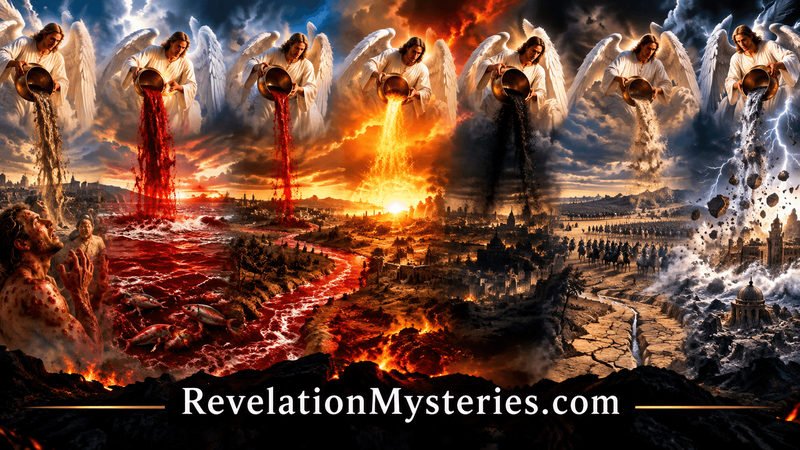
The seven bowls of God’s wrath in Revelation describe a series of devastating judgments that God pours out upon the earth during the final events of the end times. Recorded in Revelation 16, these seven bowl judgments bring suffering, destruction, and worldwide upheaval as God’s judgment reaches its climax.
What are the seven bowls of wrath? What happens when each bowl is poured out? Who experiences these judgments, and how do the seven bowls fit into the timeline of end-times prophecy?
In this comprehensive Bible study, we will examine the meaning of the seven bowl judgments, explore what the Bible says about each plague, and explain how these events relate to the tribulation, the Antichrist, the Battle of Armageddon, and the return of Jesus Christ.
The seven bowls are among the most sobering prophecies in the Book of Revelation. Understanding them helps us see the seriousness of God’s judgment, the consequences of rebellion against Him, and the ultimate victory of Jesus Christ over evil.
What Are the Seven Bowls of God’s Wrath?
The seven bowls of God’s wrath are seven final judgments described in Revelation 16. They are poured out by seven angels who receive the bowls from the heavenly temple after God’s glory and power are revealed in heaven.
Revelation 15 introduces these judgments, describing them as the last plagues through which God’s wrath is brought to completion. Revelation 16 then explains what happens when each bowl is poured out upon the earth.
These judgments affect human health, the oceans, freshwater sources, the sun, the kingdom of the beast, and the nations of the world. The final bowl brings a devastating earthquake, extraordinary upheaval, and enormous hailstones.
Unlike the earlier seal judgments in Revelation 6 and the trumpet judgments in Revelation 8–11, the bowl judgments present a concentrated series of divine punishments that bring the narrative toward its climax.
The bowls also reveal an important spiritual reality: even as people experience God’s judgments, many refuse to repent and continue to oppose Him.
Where Are the Seven Bowls Found in the Bible?
The primary passage is Revelation 16:1–21, which describes all seven bowls in sequence. Revelation 15:1–8 provides the introduction to the final judgments and shows the heavenly setting in which they are prepared.
For a broader understanding, these passages should be studied alongside Revelation 6–11, Revelation 13–14, and Revelation 19.
The judgments also contain similarities to the plagues God brought upon Egypt in Exodus 7–12. Both accounts demonstrate God’s authority over creation and His power to judge those who resist His purposes.
The Seven Bowls of God’s Wrath Explained
The following table summarizes the seven bowl judgments described in Revelation 16.
| Bowl | Biblical reference | Judgment |
|---|---|---|
| First bowl | Revelation 16:2 | Painful sores on those who bear the beast’s mark |
| Second bowl | Revelation 16:3 | The sea becomes like the blood of a dead person |
| Third bowl | Revelation 16:4–7 | Rivers and springs become blood |
| Fourth bowl | Revelation 16:8–9 | The sun scorches people with intense heat |
| Fifth bowl | Revelation 16:10–11 | Darkness falls upon the kingdom of the beast |
| Sixth bowl | Revelation 16:12–16 | The Euphrates dries up, and the nations gather for Armageddon |
| Seventh bowl | Revelation 16:17–21 | A great earthquake, Babylon’s judgment, and enormous hailstones |
Let’s examine each of these seven judgments in detail.
1. The First Bowl: Painful Sores on Those Who Follow the Beast
Bible passage: Revelation 16:2
The first angel pours out his bowl upon the earth, and painful sores break out on the people who have the mark of the beast and worship its image.
This judgment directly affects those who have aligned themselves with the beast, a central figure in the end-times prophecies of Revelation 13.
The mark of the beast is associated with allegiance to the beast and participation in its system. Revelation 14:9–11 warns of judgment against those who worship the beast and receive its mark.
The first bowl demonstrates that allegiance to an evil power cannot protect people from the judgment of God. The beast may exercise tremendous authority over the world, but its followers remain subject to the Creator.
The sores also recall the plagues of Egypt, particularly the plague of boils in Exodus 9:8–12. This connection reinforces the biblical theme of God’s intervention against those who oppose Him.
An important detail is that Revelation specifically identifies the recipients of this judgment as people who bear the beast’s mark and worship its image. The text does not describe this plague as affecting every person indiscriminately.
What does the first bowl teach us?
It shows that rebellion against God has consequences and that the apparent power of the beast cannot shield its followers from divine judgment.
2. The Second Bowl: The Sea Turns to Blood
Bible passage: Revelation 16:3
When the second angel pours out his bowl, the sea becomes like the blood of a dead person, and every living creature in the sea dies.
This judgment is catastrophic because the oceans support marine life and play a vital role in the earth’s ecological systems. The death of marine creatures would represent an extraordinary destruction of life within the world’s seas.
The second bowl also resembles the first plague in Egypt, when the waters of the Nile were turned to blood in Exodus 7:14–25. In both accounts, water becomes an instrument of judgment rather than a source of life.
Revelation does not provide a scientific explanation for how this transformation occurs. The passage presents it as a supernatural act of God’s judgment.
The sea has an important place throughout Revelation. It represents part of the created order over which God exercises authority, and it is also associated with the rise of the beast in Revelation 13:1.
The second bowl demonstrates that the natural world is not beyond God’s authority. The seas that sustain life can become part of His judgment when He brings these prophesied events to pass.
What does the second bowl teach us?
It reminds us that the Creator has authority over the entire earth and that the resources upon which humanity depends cannot ultimately protect people from His judgment.
3. The Third Bowl: Rivers and Springs Turn to Blood
Bible passage: Revelation 16:4–7
The third angel pours out his bowl upon the rivers and springs, and they become blood.
While the second bowl affects the sea, the third bowl affects freshwater sources. Rivers and springs are essential for drinking water, agriculture, and human survival. Their transformation represents another devastating blow to the earth.
In Revelation 16:5–7, an angel declares God’s justice in these judgments. The passage connects the punishment with the shedding of the blood of God’s holy people and prophets.
The angel explains that those responsible for shedding blood are given blood to drink. The language expresses a principle of divine justice: God sees the persecution and murder of His people, and He will not leave evil unjudged forever.
This passage also reveals that God’s judgments are not arbitrary. Revelation presents them as responses to persistent rebellion and the persecution of those who belong to Him.
The third bowl echoes the Egyptian water plague, but its scope extends beyond a single river to rivers and springs.
What does the third bowl teach us?
It emphasizes God’s justice and the certainty that He sees the suffering of His people. Human injustice may continue for a time, but it does not escape His attention.
4. The Fourth Bowl: The Sun Scorches the Earth
Bible passage: Revelation 16:8–9
The fourth angel pours out his bowl upon the sun, and the sun is given power to scorch people with intense heat.
The people suffer under this judgment, yet Revelation records that they curse God’s name and refuse to repent or give Him glory.
This response is one of the most significant details in the entire chapter. Even in the face of extraordinary suffering, the people described in the passage refuse to turn to God.
The judgment demonstrates God’s authority over the sun, which sustains life on earth. The same created order that provides light and warmth becomes an instrument of judgment.
Revelation does not specify the precise physical mechanism behind the intensified heat. Its emphasis is on the severity of the judgment and the people’s response.
The fourth bowl also illustrates a recurring pattern in Revelation: God’s judgments expose the human heart. Rather than responding with repentance, those who oppose Him continue in their rebellion.
This does not mean that every person who suffers in the present world is experiencing a specific divine judgment. Revelation 16 is describing a particular prophetic sequence, not providing a general explanation for every instance of human suffering.
What does the fourth bowl teach us?
It reveals the tragedy of a hardened heart. Even powerful warnings may be rejected by people who refuse to acknowledge God.
5. The Fifth Bowl: Darkness Falls on the Kingdom of the Beast
Bible passage: Revelation 16:10–11
The fifth angel pours out his bowl upon the throne of the beast, and its kingdom becomes dark.
The people experience intense pain and suffering, yet they continue to blaspheme God rather than repent of their deeds.
This judgment is particularly important because it directly targets the beast’s throne and kingdom. The beast’s political and spiritual authority is portrayed as powerful, but its kingdom cannot withstand God’s judgment.
The darkness recalls the plague of darkness in Egypt in Exodus 10:21–29. That plague demonstrated the helplessness of Pharaoh’s kingdom before the God of Israel.
In Revelation, darkness may also convey the collapse and misery of a kingdom that opposes God. The text, however, explicitly describes darkness as part of the bowl judgment rather than explaining it only as a symbol.
The fifth bowl reveals the vulnerability of the Antichrist’s dominion. Although the beast exercises authority and demands allegiance, its kingdom is subject to the sovereign rule of God.
Once again, the passage emphasizes that the people refuse to repent. Their response underscores the spiritual rebellion that characterizes the beast’s kingdom.
What does the fifth bowl teach us?
No earthly ruler, political system, or power that opposes God can claim ultimate authority. The kingdom of the beast will not escape divine judgment.
6. The Sixth Bowl: The Euphrates Dries Up and the Nations Gather at Armageddon
Bible passage: Revelation 16:12–16
The sixth angel pours out his bowl upon the great river Euphrates, and its water dries up. The way is prepared for the kings from the east.
This judgment introduces one of the most significant events in end-times prophecy: the gathering of the nations for the Battle of Armageddon.
Why Is the Euphrates River Important?
The Euphrates was a major river in the ancient Near East and served as a significant geographical boundary. In Revelation 16, its drying prepares the way for the kings from the east.
The passage does not identify every king or nation involved, nor does it fully explain the military or political circumstances surrounding their movement. Interpretations of these details differ among Bible scholars.
The central point is that the events unfold under God’s sovereign authority as the world moves toward its final confrontation.
The Three Unclean Spirits
John then sees three unclean spirits resembling frogs coming from the mouths of the dragon, the beast, and the false prophet.
These spirits perform signs and go out to the kings of the world to gather them for battle on the great day of God Almighty.
The dragon, the beast, and the false prophet form a powerful alliance opposed to God. Their deceptive activity helps mobilize the world’s rulers for the final confrontation.
Revelation 16:15 includes a warning from Jesus about remaining watchful and keeping one’s garments. This statement emphasizes spiritual readiness and faithfulness amid the events described in the chapter.
The passage then identifies the place of gathering as Armageddon.
What Is the Battle of Armageddon?
Armageddon is associated with the final gathering of the world’s rulers for battle against God. Revelation 19:11–21 provides a further account of Christ’s appearance and the defeat of the beast and the kings who oppose Him.
The sixth bowl therefore connects the bowl judgments with the climactic conflict described later in Revelation.
Christians differ on some details of the end-times timeline, including how the sixth bowl relates chronologically to other prophetic events. Nevertheless, the passage clearly portrays the gathering of rebellious earthly powers for a decisive confrontation with God.
What does the sixth bowl teach us?
It shows that the powers of evil seek to deceive the nations, but their rebellion will not overturn God’s purposes. The events leading to Armageddon remain under His sovereign authority.
7. The Seventh Bowl: The Greatest Earthquake and the Final Judgment
Bible passage: Revelation 16:17–21
The seventh angel pours out his bowl into the air, and a loud voice from the temple declares, “It is done!” (Revelation 16:17, ESV).
This declaration marks the climax of the seven bowl judgments.
The passage describes lightning, thunder, an extraordinary earthquake, the division of the great city, the collapse of cities among the nations, and the judgment of Babylon the Great.
It also describes islands fleeing and mountains disappearing, followed by enormous hailstones falling upon people.
The Great Earthquake
Revelation describes this earthquake as unparalleled in its severity. The great city is divided into three parts, and the cities of the nations fall.
The precise identification of the great city in this verse is interpreted in different ways. Revelation 17–18 develops the theme of Babylon the Great, portraying a corrupt and rebellious world power that faces God’s judgment.
The seventh bowl signals a dramatic upheaval that reaches far beyond one geographical location.
Babylon the Great Is Remembered Before God
Revelation 16:19 declares that Babylon the Great is given the cup of God’s wrath.
Babylon represents a major target of divine judgment in the final chapters of Revelation. Revelation 17–18 expands on its identity, influence, corruption, and eventual destruction.
Readers differ over whether Babylon should be understood primarily as a particular city, a future political and economic center, a religious power, a symbolic representation of the world’s corrupt systems, or a combination of these ideas.
Whatever interpretation is adopted, Revelation’s message is clear: the systems that oppose God and lead people into corruption will ultimately face His judgment.
Enormous Hailstones Fall Upon the Earth
The final bowl also brings hailstones of extraordinary size. Revelation records that people blaspheme God because of the severity of the plague.
Once again, the text emphasizes the refusal of many people to repent, even as the judgments intensify.
The hail recalls the plague in Exodus 9:13–35, in which hail devastated Egypt. The parallel reinforces the theme that God has power to intervene in human history and judge those who oppose Him.
The seventh bowl completes the series of judgments described in Revelation 16 and prepares the reader for the further revelations concerning Babylon, the victory of Christ, and the establishment of God’s final purposes.
What does the seventh bowl teach us?
It declares that evil will not continue forever. God’s judgment will bring an end to the powers that oppose Him, and the apparent permanence of corrupt earthly systems is an illusion.
Why Are the Seven Bowls Called the Wrath of God?
The seven bowls are called the bowls of God’s wrath because they represent His righteous judgment against persistent rebellion, idolatry, blasphemy, and the persecution of His people.
Revelation 15:1 describes these as the last plagues through which God’s wrath is completed. Revelation 16 then records the judgments themselves.
God’s wrath in Revelation should not be confused with uncontrolled human anger. The book presents God as the righteous Judge who sees evil, opposes rebellion, and brings justice according to His purposes.
The bowls also reveal the consequences of rejecting God. The beast and its followers oppose Him, and the judgments expose the inability of their power, wealth, and allegiance to protect them.
At the same time, Revelation is not intended merely to frighten its readers. Its larger message points toward the victory of Jesus Christ, the defeat of evil, and the fulfillment of God’s promises.
The Seven Seals, Seven Trumpets, and Seven Bowls Compared
The seven seals, seven trumpets, and seven bowls are three major sequences of judgments in the Book of Revelation.
| Judgment series | Main passage | General emphasis |
|---|---|---|
| Seven seals | Revelation 6:1–8:1 | Conquest, war, famine, death, persecution, cosmic signs, and the opening of the seventh seal |
| Seven trumpets | Revelation 8:2–11:19 | Judgments affecting the earth, sea, waters, heavenly bodies, and humanity |
| Seven bowls | Revelation 15:1–16:21 | Final plagues, escalating judgment, the gathering at Armageddon, and worldwide upheaval |
There are similarities between these series. For example, both the trumpet judgments and the bowls include judgments involving the sea, freshwater, and the sun. These parallels suggest a deliberate connection between the different visions.
However, the exact relationship between the three series is debated.
Some Christians interpret the seals, trumpets, and bowls as successive stages in a chronological end-times timeline. Others understand some of the visions as overlapping or presenting different perspectives on related events.
The bowl judgments are explicitly described as the last plagues through which God’s wrath is completed. Their placement in Revelation 15–16 makes them especially important for understanding the culmination of divine judgment.
For a more detailed explanation of the prophetic sequence, see our guide to the Book of Revelation Timeline.
Do the Seven Bowls Occur During the Great Tribulation?
Many Christians understand the seven bowls as judgments that occur during the final period of tribulation before the return of Jesus Christ. In this interpretation, the bowls represent the final outpouring of God’s wrath upon a rebellious world.
However, Christians differ on the timing and structure of the tribulation.
Some interpreters place the bowls within a future seven-year period associated with the Antichrist. Others understand the visions of Revelation through different chronological or symbolic frameworks.
Revelation 16 itself does not explicitly state that the seven bowls begin at a particular point in a seven-year period. That timeline is developed by connecting Revelation with other biblical passages, including Daniel 9:24–27 and Matthew 24.
What the text clearly establishes is that the bowls belong to the climactic judgments described in Revelation and are closely connected with the defeat of the powers that oppose God.
Understanding these interpretive differences is important when studying end-times prophecy. Readers should distinguish between what the biblical passage explicitly states and conclusions drawn by connecting multiple prophetic texts.
For more information, explore our guide to End-Times Prophecy and our study of the Antichrist.
Can Anyone Repent During the Seven Bowl Judgments?
One of the most striking features of Revelation 16 is the repeated statement that people refuse to repent.
After the fourth bowl, people curse God’s name and do not repent or give Him glory. After the fifth bowl, they continue to blaspheme God because of their pain. After the seventh bowl, they again curse God because of the severity of the judgment.
These statements emphasize the hardness of the human heart in the face of God’s warnings.
The chapter does not explicitly explain every individual’s opportunity to repent during this period, so it is important not to claim more than the text reveals. Its emphasis is on the persistent rebellion of those described in the judgments.
Throughout the Bible, God calls people to turn from sin and seek Him. The warnings of Revelation reinforce the urgency of responding to God rather than presuming that repentance can be postponed indefinitely.
For Christians studying these prophecies, the appropriate response is faithfulness, watchfulness, and confidence in God’s ultimate justice.
What Do the Seven Bowls of Wrath Reveal About God?
The seven bowl judgments reveal several important truths about God’s character and His purposes.
1. God Is Sovereign Over Creation
The bowls affect the earth, sea, rivers, sun, air, and kingdoms of the world. These judgments demonstrate that creation remains under God’s authority.
2. God Takes Evil Seriously
Revelation portrays the judgments as responses to rebellion, blasphemy, idolatry, and the persecution of God’s people. Evil may appear to prosper temporarily, but it will not escape divine judgment forever.
3. God’s Justice Will Prevail
The angelic declaration in Revelation 16:5–7 emphasizes God’s righteousness in judging the world. The passage presents His judgments as just, not arbitrary.
4. Human Rebellion Can Become Deeply Entrenched
The repeated refusal to repent illustrates the spiritual danger of hardening one’s heart against God.
5. Evil Will Ultimately Be Defeated
The bowl judgments lead toward the final confrontation with the powers of evil and the victory of Jesus Christ described in Revelation 19.
The ultimate message of Revelation is not that evil will triumph, but that Jesus Christ will prevail and God’s purposes will be fulfilled.
How Do the Seven Bowls Relate to the Second Coming of Jesus Christ?
The seven bowls prepare the narrative for the climactic events described in Revelation 17–19.
After the judgments in Revelation 16, John receives further visions concerning Babylon the Great, its destruction, the celebration of God’s victory, and the return of Jesus Christ.
Revelation 19:11–21 describes Christ appearing as the victorious King who judges righteously and defeats the beast and the forces gathered against Him.
The relationship between the final bowl and the Second Coming is important, but the precise chronology is interpreted differently by Christians. Revelation 16 introduces the gathering at Armageddon, while Revelation 19 provides a fuller account of Christ’s victory over His enemies.
Together, these chapters emphasize that the final outcome of history rests in the hands of Jesus Christ, not the beast or the rulers of the world.
You can learn more in our study of the Second Coming of Jesus Christ and our guide to the Battle of Armageddon.
Frequently Asked Questions About the Seven Bowls of God’s Wrath
What chapter of Revelation describes the seven bowls?
Revelation 16 describes all seven bowls of God’s wrath. Revelation 15 introduces the final plagues and the seven angels who pour them out.
How many bowls of God’s wrath are there?
There are seven bowls. Each represents a distinct judgment, culminating in a great earthquake, the judgment of Babylon the Great, and enormous hailstones.
What is the difference between the seven trumpets and seven bowls?
The seven trumpets appear in Revelation 8–11, while the seven bowls appear in Revelation 15–16. Both involve divine judgments, and some of their imagery overlaps. The bowls are identified as the last plagues through which God’s wrath is completed.
What is the sixth bowl of wrath?
The sixth bowl dries up the Euphrates River, prepares the way for the kings from the east, and describes demonic spirits gathering the kings of the world for the battle at Armageddon.
What happens when the seventh bowl is poured out?
The seventh bowl brings a declaration that the work is done, followed by an extraordinary earthquake, the collapse of cities, the judgment of Babylon the Great, and enormous hailstones.
Are the seven bowls literal or symbolic?
Christians differ in their interpretations. Some understand the bowls primarily as future, literal judgments, while others interpret elements of the visions symbolically or within a broader prophetic framework. Some interpreters combine literal and symbolic readings. Revelation uses vivid imagery throughout, and each passage should be interpreted in its literary and biblical context.
Are the seven bowls the final judgments of God?
Revelation 15:1 describes the bowls as the last plagues through which God’s wrath is completed. They represent the climax of the judgment sequence in Revelation 15–16. The book then continues with further visions of Babylon’s destruction, Christ’s victory, final judgment, and the new heaven and new earth.
What is the purpose of the seven bowl judgments?
The judgments demonstrate God’s sovereignty, His opposition to evil, and the certainty of divine justice. They also form part of the prophetic narrative leading toward the defeat of the beast and the ultimate victory of Jesus Christ.
Conclusion: The Seven Bowls Reveal the Finality of God’s Judgment
The seven bowls of God’s wrath in Revelation 16 describe some of the most severe judgments in biblical prophecy. From painful sores and the transformation of the waters to scorching heat, darkness, Armageddon, and the final earthquake, each bowl reveals the consequences of a world in rebellion against God.
These judgments also demonstrate that earthly powers cannot overcome the Creator. The beast, the false prophet, and the rulers who oppose God may exercise tremendous influence, but their authority is temporary.
One of the chapter’s most sobering lessons is the repeated refusal of people to repent, even when confronted with God’s judgments. Revelation warns readers against hardening their hearts and treating God’s warnings lightly.
Yet the broader message of Revelation extends beyond judgment. The book points toward the return of Jesus Christ, the defeat of evil, and the fulfillment of God’s promises.
Studying the seven bowls helps us understand the final chapters of biblical prophecy and the seriousness with which God addresses evil. It also encourages us to remain faithful to Jesus Christ, to study Scripture carefully, and to live with confidence in God’s ultimate victory.
Continue studying the Book of Revelation: Explore our guides to the Book of Revelation Timeline, the Antichrist, the Mark of the Beast, the Battle of Armageddon, and the Second Coming of Jesus Christ to gain a deeper understanding of end-times prophecy.
For a more in-depth exploration of Revelation’s prophecies, consider Unraveling the Mysteries of the Book of Revelation, a book devoted to examining the visions, symbols, and prophetic events recorded in the final book of the Bible.
Continue Studying the Book of Revelation
The seven seals are only the beginning of some of the most remarkable prophetic visions in Scripture.
Continue your study of the Book of Revelation by exploring on revelationmysteries.com:
- Revelation Explained
- Revelation Timeline
- The Seven Trumpets in Revelation
- The Seven Bowls of God’s Wrath
- The Four Horsemen of the Apocalypse
- The 144,000 in Revelation 7
- The Great Multitude in Revelation 7
- The Antichrist in Revelation
- The Beast of Revelation 13
- The Mark of the Beast
- Babylon the Great
- Armageddon
- The Second Coming of Jesus
- The Millennium
- The Great White Throne Judgment
- The New Jerusalem
- The New Heaven and New Earth
The more carefully we study Revelation in its biblical context, the more clearly we see that its ultimate purpose is not to satisfy curiosity about the future.
It is to reveal Jesus Christ and call His people to remain faithful until He comes.
Why Buy Unraveling The Mysteries of the Book Of Revelation?
The Book of Revelation is one of the most fascinating, challenging, and often misunderstood books of the Bible.
Filled with visions, symbols, prophetic events, heavenly scenes, judgments, spiritual warfare, the Antichrist, the beast, Babylon, the return of Jesus Christ, the Millennium, the final judgment, the New Jerusalem, and the new heaven and new earth, Revelation can seem overwhelming when you first begin reading it.
Unraveling The Mysteries of The Book of Revelation by Kevin Bart was written to help readers understand this remarkable book of the Bible in a clear, organized, and accessible way.
Rather than treating Revelation as an impossible mystery, this book examines its major prophecies, symbols, events, and themes while seeking to understand them in light of Scripture.
Answering All Your Questions About Revelation
Since Unraveling The Mysteries of the Book Of Revelation by Kevin Bart is a clear verse-by-verse guide to understanding end times prophecy and Revelation, it answers all of the questions people have.
If you have ever asked questions such as:
- Can the Book of Revelation be explained?
- How should Revelation be interpreted?
- Does the Book Of Revelation have a timeline?
- Who are the 144,000 in Revelation?
- What are the seven seals?
- Who are the 4 horsemen of the Apocalypse?
- What are the seven trumpets?
- What are the seven bowls of God’s wrath?
- Who is the Antichrist?
- What is the mark of the beast?
- Who are the two witnesses?
- What is Babylon in Revelation?
- When will Jesus return?
- What is the Millennium?
- What happens after the final judgment?
- What is the New Jerusalem?
- What does Revelation say about the end times?
- Why should I buy and read Unraveling The Mysteries of the Book Of Revelation?
then Unraveling The Mysteries of the Book of Revelation was written for you.
