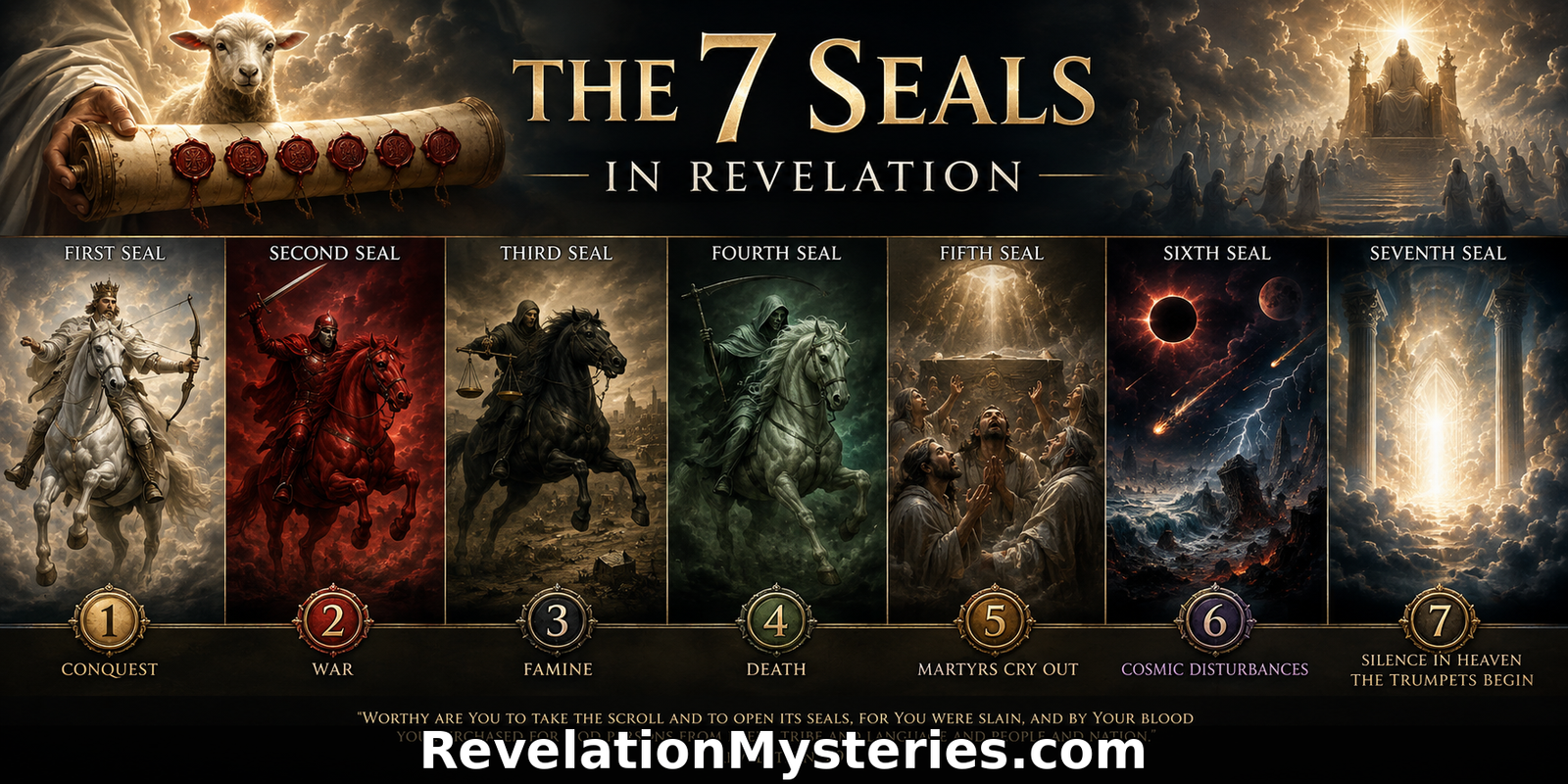
The seven seals in Revelation are among the most fascinating and mysterious events described in the Bible. Beginning in Revelation 6 and continuing through Revelation 8, the opening of the seven seals reveals a series of dramatic events associated with judgment, suffering, persecution, cosmic upheaval, and the unfolding of God’s prophetic plan.
The seven seals are part of the heavenly vision given to the apostle John while he was on the island of Patmos. In Revelation 5, John sees God seated on His throne holding a scroll sealed with seven seals. The scroll represents God’s purposes and the unfolding of His plan for judgment and redemption. Yet no one in heaven or on earth is initially found worthy to open the scroll.
Then John sees Jesus Christ, described as the Lion of the tribe of Judah and the Lamb who was slain. Jesus takes the scroll from God’s hand and begins opening its seven seals.
As each seal is opened, John sees another stage of the prophetic vision.
The first four seals introduce the famous Four Horsemen of the Apocalypse. The fifth seal reveals believers who have been killed because of their testimony for Jesus Christ. The sixth seal brings terrifying cosmic disturbances. Finally, the seventh seal introduces the seven trumpets and another series of judgments.
Understanding the seven seals is essential for understanding the broader message of the Book of Revelation.
What Are the Seven Seals in Revelation?
The seven seals in Revelation are seven seals placed on a scroll in heaven that Jesus Christ opens one by one.
They are described primarily in Revelation 6–8.
The seven seals are:
- The First Seal — The White Horse
- The Second Seal — The Red Horse
- The Third Seal — The Black Horse
- The Fourth Seal — The Pale Horse
- The Fifth Seal — The Martyrs Under the Altar
- The Sixth Seal — Cosmic Disturbances and God’s Wrath
- The Seventh Seal — Silence in Heaven and the Seven Trumpets
The first four seals are particularly famous because they introduce the Four Horsemen of the Apocalypse.
However, the seven seals involve much more than the four horsemen. Together, they present a progression involving conquest, warfare, famine, death, persecution, cosmic upheaval, and the continuation of divine judgment.
Where Are the Seven Seals Found in the Bible?
The seven seals are found primarily in:
- Revelation 5 — The scroll with seven seals
- Revelation 6 — The first six seals – the beginning of the 7 year tribulation
- Revelation 7 — The 144,000 and the great multitude
- Revelation 8:1 — The opening of the seventh seal
This means that the seven seals cannot be understood properly by reading only Revelation 6.
Revelation 5 establishes the heavenly setting and identifies the One who is worthy to open the scroll. Revelation 6 describes the first six seals. Revelation 7 provides an important interlude between the sixth and seventh seals. Revelation 8 then describes the opening of the seventh seal and the beginning of the seven trumpet judgments.
Revelation 5: The Scroll Sealed With Seven Seals
Before John sees the seven seals opened, he sees something extremely important in heaven. God is seated on His throne, and He holds a scroll sealed with seven seals.
“Then I saw in the right hand of him who was seated on the throne a scroll written within and on the back, sealed with seven seals.” – Revelation 5:1
What Does The Scroll Represent?
A scroll or document with 7 seals is what the Romans used as a will in ancient times. This scroll appears in a vision the Old Testament prophet Ezekiel had of the scroll in God’s right hand. He writes about a scroll with writing on both sides. A scroll normally was written only on one side, so this is unusual.
He also mentions that the scroll had words of lamentation, mourning, and woe. Each of the 7 seals on the scroll in God’s right hand in Revelation 5:1, when opened, lead to events with much lamentation, mourning, and woe to the inhabitants of the world.
“And when I looked, behold, a hand was stretched out to me, and behold, a scroll of a book was in it. And he spread it before me. And it had writing on the front and on the back, and there were written on it words of lamentation and mourning and woe.” – Ezekiel 2:9–10
The scroll with 7 seals is God’s will, giving the deed or title of the universe to the One who is worthy to reign. And also revealing and starting the events that lead to the end of the world, and the Eternal destiny of those who faithfully follow and serve God, and those who do not.
Satan was allowed to roam free in the world to deceive many until God’s time of judgement and eternal punishment. Someone worthy needs to take the scroll and open it, to reign in the universe, and to start the end times events of God’s judgment and wrath. The events foretold in Revelation are not just about the Great Tribulation and God’s wrath and punishment of Satan, and for sinners who reject Christ. They are also about Jesus taking the reign of the universe, and starting His eternal kingdom and reign. And about Jesus ridding the world of Satan and evil and sin.
A mighty angel asks:
“Who is worthy to open the scroll and to break its seals?”
No one is initially found worthy. John begins to weep because no one is able to open the scroll.
Then one of the elders tells John not to weep because the Lion of the tribe of Judah has conquered. John looks and sees something unexpected.
Instead of seeing only a lion, he sees a Lamb standing as though it had been slain. This is Jesus Christ.
The imagery is extremely important because Revelation presents Jesus as both the conquering King and the sacrificial Lamb. Jesus takes the scroll, and heaven erupts in worship.
This establishes a central truth concerning the seven seals: Jesus Christ is the One who opens the seals. The judgments that follow are therefore not outside God’s sovereignty. They unfold under the authority of Christ.
The First Seal — The White Horse
Revelation 6:1–2
When Jesus opens the first seal, John sees a white horse.
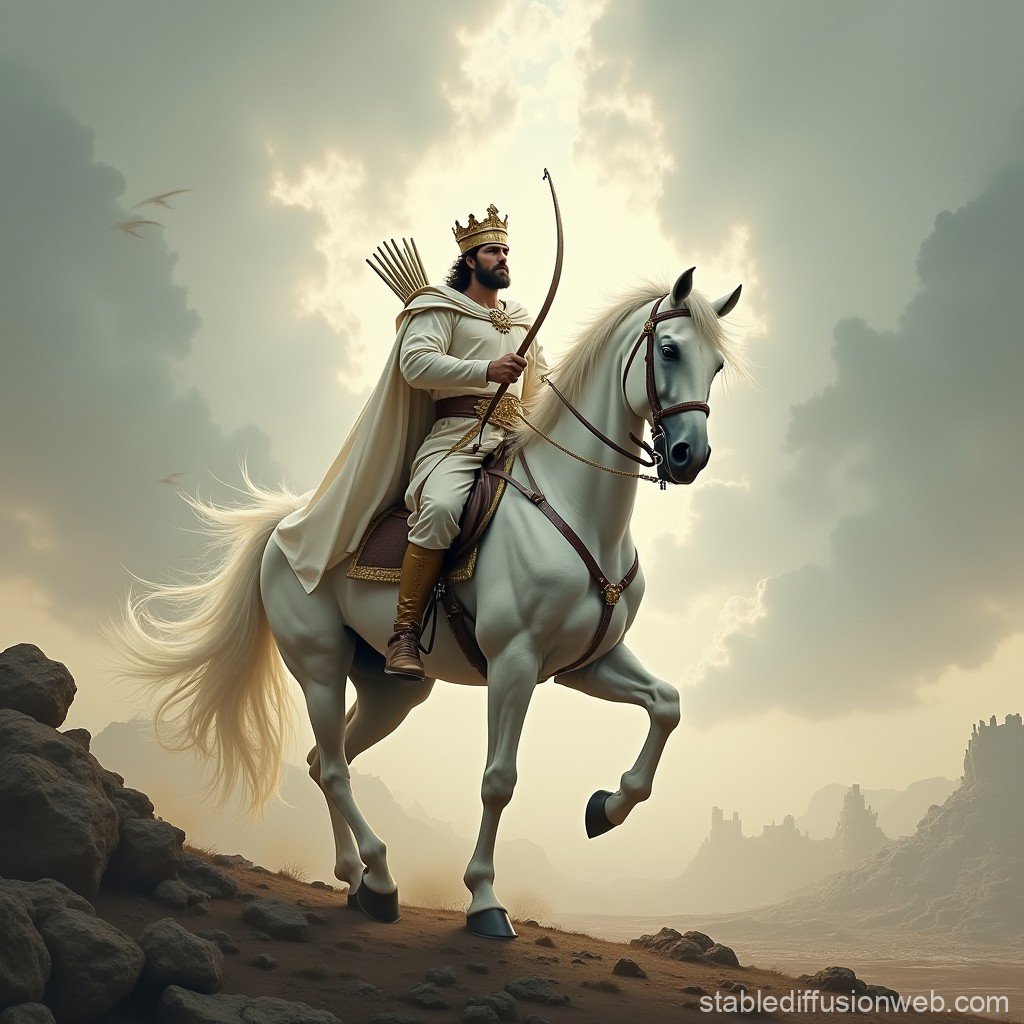
Its rider carries a bow and is given a crown. He goes out conquering and to conquer.
This is the beginning of the Four Horsemen of the Apocalypse.
Who Is the Rider on the White Horse?
One of the most debated questions concerning the seven seals is:
Who is the rider on the white horse in Revelation 6?
There are several interpretations. Some interpreters believe the rider represents conquest, particularly the expansion of military power and empire. Others have suggested that the rider represents a deceptive imitation of Christ.
This interpretation is partly based on the fact that Jesus Himself later appears riding a white horse in Revelation 19. However, the rider in Revelation 6 should not automatically be identified as Jesus.
The context is different. The rider in Revelation 6 appears as part of a sequence of judgments that includes warfare, famine, and death.
Read why I believe that the rider on the white horse is the antichrist in this article about the 4 Horsemen of the Apocalypse.
What Does the First Seal Mean?
The first seal appears to represent the beginning of a period of extraordinary global upheaval. And it is the beginning of the 7 year tribulation period.
The imagery of used in the first seal suggests conquering or taking power over the world. But not through military might or victories. It is more through deception and false promises of world peace.
The first seal therefore introduces a progression:
Conquest/False Peace → War → Famine → Death
The first horseman sets the stage for what follows.
The Second Seal — The Red Horse
Revelation 6:3–4
When Jesus opens the second seal, John sees a red horse.
Its rider is given power to take peace from the earth so that people will kill one another.
The rider is also given a great sword.
What Does the Red Horse Represent?
The second seal represents war and widespread violence.
Peace is removed from the earth.
This is more than ordinary political disagreement or isolated warfare. The language presents a dramatic escalation of conflict and bloodshed.
The red horse is therefore commonly understood as a symbol of:
- War
- Violence
- Bloodshed
- Civil conflict
- Loss of peace
- Military destruction
The progression from the first seal to the second is significant.
Conquest leads to conflict.
The first horseman goes out conquering, and the second horseman brings the removal of peace.
The Third Seal — The Black Horse
Revelation 6:5–6
When the third seal is opened, John sees a black horse.
Its rider holds a pair of scales in his hand.
John hears a voice announcing extremely high prices for basic food.
The imagery strongly suggests famine and economic hardship.
What Do the Scales Mean?
The scales indicate measurement.
Food is being carefully measured because it has become scarce and expensive.
The passage describes an extraordinary price for basic grain, indicating severe economic pressure.
The third seal therefore represents conditions associated with:
- Famine
- Food shortages
- Inflation
- Economic hardship
- Scarcity
- Hunger
The relationship between the first three seals is important.
Conquest produces conflict.
Conflict produces disruption.
Disruption contributes to famine and economic suffering.
The black horse represents a world where ordinary necessities have become extremely difficult to obtain.
The Fourth Seal — The Pale Horse
Revelation 6:7–8
The fourth seal is perhaps the most terrifying of the Four Horsemen.
When Jesus opens the fourth seal, John sees a pale horse.
The rider’s name is Death, and Hades follows him.
Authority is given to them over a significant portion of the earth.
The causes of death specifically mentioned include:
- Sword
- Famine
- Pestilence
- Wild beasts
What Does the Pale Horse Represent?
The pale horse represents death on an unprecedented scale.
The first three horsemen have produced conquest, war, and famine. Now death follows.
This creates a powerful progression:
First Seal
Conquest
Second Seal
War
Third Seal
Famine
Fourth Seal
Death
The Four Horsemen therefore form one of the most memorable prophetic sequences in Scripture.
Who Are the Four Horsemen of the Apocalypse?
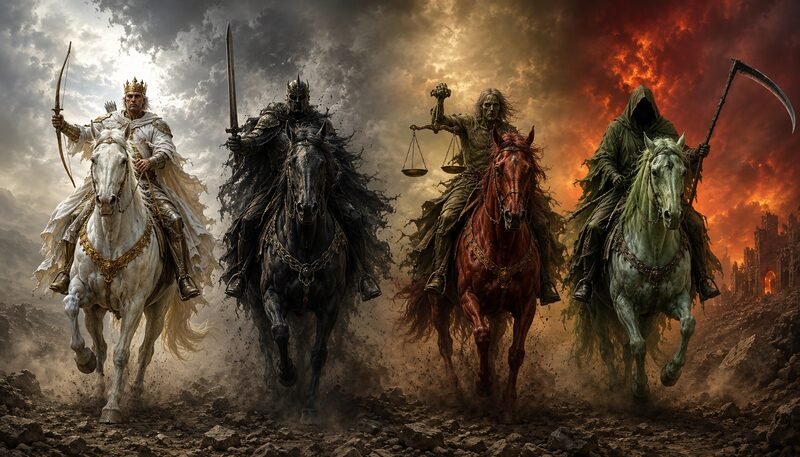
The Four Horsemen of the Apocalypse are the four riders introduced when Jesus opens the first four seals in Revelation 6.
They are commonly understood as representing:
| Seal | Horse | Rider | Common Interpretation |
|---|---|---|---|
| First Seal | White | Conquering rider | Conquest/False Peace |
| Second Seal | Red | Rider with sword | War |
| Third Seal | Black | Rider with scales | Famine |
| Fourth Seal | Pale | Death | Death and widespread destruction |
The Four Horsemen are among the most recognizable symbols in the entire Book of Revelation.
However, they should not be separated from the larger context of the seven seals.
They are only the first four seals.
The fifth, sixth, and seventh seals reveal other important dimensions of the prophetic vision.
The Fifth Seal — The Martyrs Under the Altar
Revelation 6:9–11
When Jesus opens the fifth seal, the scene changes dramatically.
John no longer sees a horse.
Instead, he sees the souls of people who have been killed because of their faithfulness to God and their testimony about Jesus.
They are pictured under the altar in heaven.
They cry out to God, asking how long it will be before He judges those responsible for their deaths and avenges their blood.
They are given white robes and told to rest for a little while longer.
Who Are the Martyrs in the Fifth Seal?
The fifth seal emphasizes persecution and martyrdom.
These are faithful servants of God who have suffered and died because of their testimony.
The passage reveals several important truths about Christian persecution.
First, God knows what His people have suffered.
Second, their deaths are not forgotten.
Third, God has not abandoned them.
Fourth, divine justice will ultimately come.
The fifth seal therefore shifts the focus from earthly catastrophe to the spiritual reality of those who remain faithful to Christ despite persecution.
What Does the Fifth Seal Mean?
The fifth seal teaches that persecution is not evidence that God has lost control.
The martyrs ask, in effect, how long God’s judgment will be delayed.
But they are told to wait.
This is an important biblical theme.
God’s justice may sometimes appear delayed from a human perspective, but Scripture repeatedly teaches that divine justice is certain.
The fifth seal therefore contains both:
Suffering and hope.
The martyrs have experienced tremendous suffering, but they are honored in heaven and given white robes.
Their story demonstrates the value God places on faithfulness to Christ.
The Sixth Seal — Cosmic Disturbances
Revelation 6:12–17
The sixth seal introduces another dramatic escalation.
John sees a great earthquake.
The sun becomes dark.
The moon becomes like blood.
Stars appear to fall from heaven.
The heavens are dramatically shaken.
Mountains and islands are moved from their places.
The inhabitants of the earth respond with terror.
They recognize that the great day of God’s wrath has come.
What Happens When the Sixth Seal Is Opened?
The sixth seal contains imagery of:
- A great earthquake
- Darkness
- The sun becoming black
- The moon becoming like blood
- Stars falling
- The heavens being shaken
- Mountains and islands being moved
- Terror among the inhabitants of the earth
- Recognition of God’s coming judgment
This is one of the most dramatic scenes in the Book of Revelation.
Is the Sixth Seal Literal or Symbolic?
One of the most important questions about Revelation is whether its imagery should be understood literally, symbolically, or through a combination of both.
The Book of Revelation uses extensive symbolism.
At the same time, symbolic imagery can communicate real future events.
For example, an earthquake in prophetic literature may describe an actual physical event, while the language surrounding it communicates theological significance.
Therefore, it is important not to assume that every symbol must be merely metaphorical or that every image must be interpreted as a literal photograph of future events.
The larger context matters.
The sixth seal clearly communicates a dramatic divine intervention and judgment.
Who Can Stand Before God’s Wrath?
At the end of Revelation 6, the people of the earth ask a profound question:
Who can stand?
This question leads directly into Revelation 7.
The sixth seal has revealed overwhelming judgment.
Human power cannot protect people from God’s authority.
Political leaders cannot control it.
Military strength cannot stop it.
Wealth cannot purchase escape from it.
Humanity is confronted with the reality of divine judgment.
But Revelation 7 immediately provides an important answer.
God knows and preserves His people.
Revelation 7: The 144,000
Revelation 7 is a parenthetical chapter, and provides an interlude or break between the sixth and seventh seals.
John sees four angels holding back the four winds of the earth. Another angel appears with the seal of the living God.
The servants of God are sealed on their foreheads. John hears the number of those sealed: 144,000.
They are described as coming from the tribes of Israel.
Who Are the 144,000 in Revelation?
The identity of the 144,000 has been debated for centuries.
Major interpretations include:
- A literal number of Jewish believers
- A symbolic representation of the complete people of God
- A specially protected group during the end times
- A representation of faithful believers connected with Israel
Different Christian traditions interpret this passage differently. Read who I believe the 144,000 are.
What is clear from the text is that the 144,000 are associated with God’s servants and His protective seal. The passage emphasizes God’s sovereignty over His faithful servants.
The Great Multitude in Revelation 7
After hearing the number of the 144,000, John sees another extraordinary vision. He sees a great multitude that no one could number.
They come from every nation, tribe, people, and language. They stand before God’s throne and before the Lamb.
They are wearing white robes and holding palm branches. They worship God and the Lamb.
Who Is the Great Multitude?
The great multitude represents people from around the world who have come to faith in Jesus during the tribulation.
They will be killed by the antichrist during the tribulation, and now they stand before God’s throne in Revelation 7.
This is one of the most encouraging visions in the entire Book of Revelation. The story of Revelation is not ultimately about destruction.
It is about Jesus Christ, redemption, judgment, victory, and God’s eternal kingdom. Even in the midst of terrifying prophetic events, Revelation continually reminds believers that God has a redeemed people. And they will be rewarded for their faithfulness and obedience.
The Seventh Seal — Silence in Heaven
Revelation 8:1
Finally, Jesus opens the seventh seal. Something remarkable happens.
There is silence in heaven for about half an hour. After the thunderous scenes of the previous chapters, the sudden silence is striking.
The seventh seal does not immediately introduce another horseman. Instead, it creates a dramatic transition to the seven trumpets.
What Does the Silence in Heaven Mean?
The Bible does not explicitly explain why there is silence in heaven for about half an hour.
Several possibilities have been suggested.
The silence may communicate:
- Awe before God’s judgment
- Anticipation
- Solemnity
- The seriousness of what is about to happen
- A dramatic pause before further judgment
Whatever the precise symbolism, the effect is powerful.
Heaven becomes silent.
The next phase of God’s judgment is about to begin.
The Seven Seals and the Seven Trumpets
The seventh seal is directly connected with the seven trumpets. Revelation 8 introduces seven angels who are given seven trumpets.
This means the seven seals are not an isolated series of events. They are part of a larger structure within Revelation.
A simplified sequence is: Seven Seals → Seven Trumpets → Seven Bowls
Each series reveals another dimension of God’s judgment. The seventh seal leads into the seven trumpets.
Later, the seventh trumpet leads toward the final stages of God’s plan. The seven bowls then present another series of judgments.
Each series of God’s judgments occur at a more rapid pace than the previous series. And each series affects the world on a progressively larger scale.
What Is the Purpose of the Seven Seals?
The seven seals reveal several major themes.
1. Jesus Is Sovereign
The seals are opened by Jesus.
This is extremely important.
The world may appear chaotic, but Revelation presents Christ as sovereign over the unfolding of God’s plan.
2. Human Sin Has Consequences
The judgments reveal the devastating consequences of rebellion, violence, injustice, and sin.
3. God’s Justice Is Certain
The fifth seal particularly emphasizes that God sees the suffering of His people and will ultimately judge evil.
4. Persecution Will Not Have the Final Word
The martyrs are not forgotten.
They are honored before God.
5. God Knows His People
Revelation 7 emphasizes God’s seal upon His servants.
6. Judgment Is Moving Toward a Climax
The seals progressively move the narrative toward increasingly dramatic manifestations of God’s judgment.
Are the Seven Seals Happening Today?
This is one of the most frequently asked questions about the Book of Revelation.
People naturally look at wars, economic instability, famine, persecution, earthquakes, and other disasters and wonder whether they are witnessing the seven seals.
It is important to be careful.
The Bible does not give us permission to confidently identify every modern event as a specific seal.
Wars have occurred throughout history.
Famines have occurred throughout history.
Earthquakes have occurred throughout history.
Persecution has occurred throughout history.
Therefore, Christians should avoid sensational predictions based solely on current events.
At the same time, the prophetic message of Revelation should not be dismissed.
The seven seals point toward God’s ultimate purposes and remind believers that history is moving toward God’s appointed conclusion.
The appropriate response is not panic.
It is faithfulness to Jesus Christ.
Are the Seven Seals the Tribulation?
Another important question is whether the seven seals are identical to the Great Tribulation.
Christian interpretations differ.
Some understand the seals as describing events during a future period of tribulation.
Others understand some of the seals as describing recurring patterns throughout history that ultimately reach their climax at the end of the age.
Still others interpret Revelation through symbolic or historical frameworks.
Because Revelation contains highly symbolic prophetic imagery, Christians have developed several major interpretive approaches.
These include:
- Futurist
- Historicist
- Preterist
- Idealist
A careful study should recognize these different approaches rather than pretending that every detail has been interpreted identically throughout Christian history.
The Seven Seals and the End Times
The seven seals are closely connected with Christian discussions about end times prophecy.
They raise important questions about:
- The Great Tribulation
- The Second Coming of Jesus
- God’s judgment
- Christian persecution
- The Antichrist
- The Beast
- The Mark of the Beast
- The resurrection
- The kingdom of God
- Armageddon
- Final judgment
- The New Heaven and New Earth
However, the seven seals should not be studied in isolation.
They are part of a much larger prophetic narrative.
To understand Revelation properly, it is important to study the entire book in context.
Seven Seals vs. Seven Trumpets vs. Seven Bowls
One of the most common sources of confusion is the difference between the three major series of judgments.
Seven Seals
The seven seals begin in Revelation 6.
They include:
- Four Horsemen
- Martyrs
- Cosmic disturbances
- Silence in heaven
Seven Trumpets
The seven trumpets begin in Revelation 8.
They introduce another series of dramatic judgments involving the earth, sea, waters, heavenly bodies, demonic forces, and ultimately the kingdom of God.
Seven Bowls
The seven bowls appear later in Revelation 15–16.
They describe the seven last plagues and represent another dramatic climax of divine judgment.
A useful way to remember the structure is:
Seals → Trumpets → Bowls
The Seven Seals in Order
Here is a simple summary of the seven seals in Revelation:
1. First Seal — White Horse
A rider goes out conquering.
Theme: Conquest
2. Second Seal — Red Horse
Peace is removed from the earth and people kill one another.
Theme: War
3. Third Seal — Black Horse
Scales and extremely high food prices appear.
Theme: Famine and economic hardship
4. Fourth Seal — Pale Horse
Death and Hades are given authority over a significant portion of the earth.
Theme: Death
5. Fifth Seal — Martyrs
Those killed for their testimony cry out for God’s justice.
Theme: Persecution and martyrdom
6. Sixth Seal — Cosmic Disturbances
A great earthquake and dramatic disturbances occur in the heavens and on earth.
Theme: Divine judgment and cosmic upheaval
7. Seventh Seal — Silence
Heaven becomes silent, and the seven trumpets are introduced.
Theme: Anticipation and transition to further judgment
What Do the Seven Seals Mean for Christians Today?
The seven seals are not merely information about future events.
They carry a spiritual message for believers today.
Be Faithful to Christ
The fifth seal reminds Christians that following Jesus may involve suffering.
Revelation repeatedly calls God’s people to remain faithful.
Do Not Put Your Hope in the World
The first four seals reveal how quickly human civilization can descend into violence, scarcity, and death.
Christians are called to place their ultimate hope in God rather than human systems.
Remember God’s Justice
The martyrs in Revelation 6 ask how long God’s judgment will be delayed.
Their question reminds us that God sees injustice even when it appears that evil is winning.
Trust God’s Sovereignty
Perhaps the greatest message of the seven seals is that Jesus remains in control.
The Lamb opens the seals.
The future is not controlled by Satan.
It is not controlled by political leaders.
It is not controlled by armies.
It is not controlled by economic powers.
God’s purposes ultimately prevail.
Why Does Jesus Open the Seals?
This is one of the most important theological questions in Revelation.
Why does Jesus open the seals?
Because He is worthy.
Revelation 5 presents Jesus as the Lamb who was slain.
His authority is connected with His sacrificial death and victory.
The One who opens the seals is the same One who gave Himself for sinners.
This creates a profound contrast.
The Judge is also the Savior.
The Lamb is also the King.
The One who was crucified is also the One who ultimately conquers.
That is why the seven seals must always be understood in the context of Revelation’s central message:
Jesus Christ wins.
The Four Horsemen and the Gospel
The Four Horsemen are frightening, but Revelation is not ultimately a message of hopelessness.
The opening chapters of Revelation repeatedly call people to repentance and faithfulness.
The gospel remains central to God’s purposes.
The book begins with Jesus Christ and ends with the triumph of Jesus Christ.
The judgments of Revelation should therefore drive us toward the seriousness of sin and the necessity of reconciliation with God.
For Christians, the appropriate response to Revelation is not obsession with dates or speculation about headlines.
It is faithfulness.
Frequently Asked Questions About the Seven Seals
What are the seven seals in Revelation?
The seven seals are seven seals on a heavenly scroll that Jesus Christ opens in Revelation 6–8. They reveal a progression of conquest, war, famine, death, persecution, cosmic disturbance, and the transition to the seven trumpet judgments.
What are the Four Horsemen of the Apocalypse?
The Four Horsemen appear when the first four seals are opened. They are associated with conquest, war, famine, and death.
Who opens the seven seals?
Jesus Christ, represented as the Lamb, opens the seven seals.
What is the first seal in Revelation?
The first seal reveals a rider on a white horse who goes out conquering.
What is the second seal in Revelation?
The second seal reveals a red horse whose rider is given authority to remove peace from the earth.
What is the third seal in Revelation?
The third seal reveals a black horse and a rider holding scales, representing severe scarcity and famine.
What is the fourth seal in Revelation?
The fourth seal reveals a pale horse whose rider is named Death, with Hades following.
What is the fifth seal in Revelation?
The fifth seal reveals the souls of believers who were killed because of their testimony and faithfulness to God.
What is the sixth seal in Revelation?
The sixth seal involves a great earthquake and dramatic disturbances involving the sun, moon, stars, heavens, mountains, and islands.
What is the seventh seal in Revelation?
The seventh seal produces silence in heaven for about half an hour and introduces the seven trumpet judgments.
Are the seven seals the same as the seven trumpets?
No. The seven seals, seven trumpets, and seven bowls are three distinct series of events in Revelation, although they are closely connected.
Are the seven seals happening right now?
The Bible does not allow us to confidently identify every modern event with a particular seal. Christians disagree about the precise timing and interpretation of the seals.
What is the most important message of the seven seals?
The central message is that Jesus Christ is sovereign, God’s judgment is certain, evil will not ultimately triumph, and God’s people must remain faithful to Him.
How the Seven Seals Fit Into the Book of Revelation
The seven seals make much more sense when viewed within the overall structure of Revelation.
A simplified outline is:
Revelation 1 — The revelation of Jesus Christ
Revelation 2–3 — Messages to the seven churches
Revelation 4 — God’s throne in heaven
Revelation 5 — The Lamb and the scroll
Revelation 6 — The first six seals
Revelation 7 — The 144,000 and great multitude
Revelation 8–9 — The seven trumpets
Revelation 10–11 — The mighty angel, two witnesses, and seventh trumpet
Revelation 12–14 — The dragon, Beast, false prophet, and final conflict
Revelation 15–16 — The seven bowls
Revelation 17–18 — Babylon’s judgment
Revelation 19 — The return of Christ
Revelation 20 — The millennium and final judgment
Revelation 21–22 — The New Heaven, New Earth, New Jerusalem, and River of Life
This larger picture is important because the seven seals are only one part of the prophetic story.
The Ultimate Message of the Seven Seals
The seven seals contain some of the most dramatic imagery in the Bible.
There is conquest.
There is war.
There is famine.
There is death.
There is persecution.
There is cosmic upheaval.
There is silence in heaven.
Yet the most important figure in the seven seals is not one of the horsemen.
It is Jesus Christ, the Lamb.
The seals begin with Jesus receiving the scroll.
They unfold under His authority.
And the entire story of Revelation ultimately moves toward His victory.
The seven seals remind us that evil does not have unlimited power.
Human kingdoms do not have the final word.
Death does not have the final word.
Persecution does not have the final word.
Satan does not have the final word.
Jesus Christ has the final word.
For those who follow Christ, the message of Revelation is therefore not simply a warning about coming judgment. It is also a call to perseverance, holiness, faith, courage, and hope.
The believers who appear under the fifth seal demonstrate this clearly. They remained faithful even when faithfulness cost them their lives.
The great multitude in Revelation 7 demonstrates the outcome.
God’s redeemed people stand before His throne.
And the Lamb who was slain is at the center of their worship.
Conclusion: Understanding the Seven Seals in Revelation
The seven seals in Revelation form one of the most important prophetic sections of the Bible.
Beginning with the scroll in Revelation 5 and continuing through Revelation 8, the seals reveal a dramatic progression of events associated with God’s judgment and the fulfillment of His purposes.
The first four seals introduce the Four Horsemen of the Apocalypse:
White horse — conquest
Red horse — war
Black horse — famine
Pale horse — death
The fifth seal reveals the martyrs who remained faithful to God.
The sixth seal reveals terrifying cosmic disturbances and humanity’s recognition of God’s judgment.
The seventh seal produces silence in heaven and transitions into the seven trumpet judgments.
While Christians differ concerning the precise interpretation and timing of these events, one truth stands at the center of the passage:
Jesus Christ is worthy, Jesus Christ is sovereign, and God’s purposes will ultimately be fulfilled.
The proper response to the seven seals is therefore not fear-driven speculation.
It is to know Christ, trust Christ, remain faithful to Christ, and live with the hope that Revelation ultimately gives to everyone who belongs to Him.
The final victory belongs to the Lamb.
Continue Studying the Book of Revelation
The seven seals are only the beginning of some of the most remarkable prophetic visions in Scripture.
Continue your study of the Book of Revelation by exploring on revelationmysteries.com:
- Revelation Explained
- Revelation Timeline
- The Seven Trumpets in Revelation
- The Seven Bowls of God’s Wrath
- The Four Horsemen of the Apocalypse
- The 144,000 in Revelation 7
- The Great Multitude in Revelation 7
- The Antichrist in Revelation
- The Beast of Revelation 13
- The Mark of the Beast
- Babylon the Great
- Armageddon
- The Second Coming of Jesus
- The Millennium
- The Great White Throne Judgment
- The New Jerusalem
- The New Heaven and New Earth
The more carefully we study Revelation in its biblical context, the more clearly we see that its ultimate purpose is not to satisfy curiosity about the future.
It is to reveal Jesus Christ and call His people to remain faithful until He comes.
Why Buy Unraveling The Mysteries of the Book Of Revelation?
The Book of Revelation is one of the most fascinating, challenging, and often misunderstood books of the Bible.
Filled with visions, symbols, prophetic events, heavenly scenes, judgments, spiritual warfare, the Antichrist, the beast, Babylon, the return of Jesus Christ, the Millennium, the final judgment, the New Jerusalem, and the new heaven and new earth, Revelation can seem overwhelming when you first begin reading it.
Unraveling The Mysteries of The Book of Revelation by Kevin Bart was written to help readers understand this remarkable book of the Bible in a clear, organized, and accessible way.
Rather than treating Revelation as an impossible mystery, this book examines its major prophecies, symbols, events, and themes while seeking to understand them in light of Scripture.
Answering All Your Questions About Revelation
Since Unraveling The Mysteries of the Book Of Revelation by Kevin Bart is a clear verse-by-verse guide to understanding end times prophecy and Revelation, it answers all of the questions people have.
If you have ever asked questions such as:
- Can the Book of Revelation be explained?
- How should Revelation be interpreted?
- Does the Book Of Revelation have a timeline?
- Who are the 144,000 in Revelation?
- What are the seven seals?
- Who are the 4 horsemen of the Apocalypse?
- What are the seven trumpets?
- What are the seven bowls of God’s wrath?
- Who is the Antichrist?
- What is the mark of the beast?
- Who are the two witnesses?
- What is Babylon in Revelation?
- When will Jesus return?
- What is the Millennium?
- What happens after the final judgment?
- What is the New Jerusalem?
- What does Revelation say about the end times?
- Why should I buy and read Unraveling The Mysteries of the Book Of Revelation?
then Unraveling The Mysteries of the Book of Revelation was written for you.
Seven Trumpets In Revelation: A Biblical Guide to Revelation 8-11
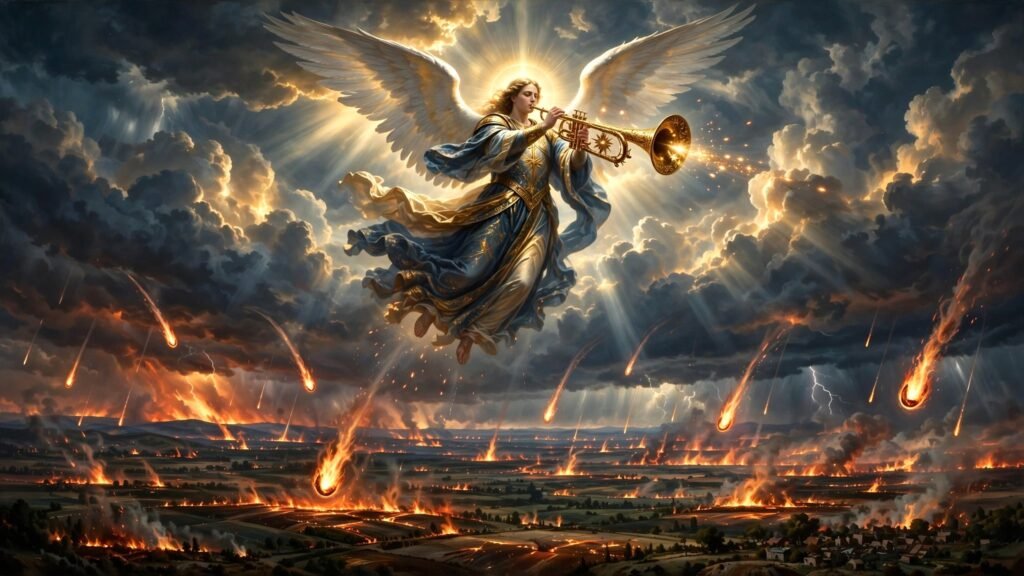
What are the Seven Trumpets in Revelation? The seven trumpets are a series of dramatic judgments described in the Book of Revelation. They appear primarily in Revelation chapters 8–11 and form one of the most important prophetic sequences in the Bible.
When the seventh seal is opened, seven angels are given seven trumpets. As each angel sounds a trumpet, another judgment unfolds upon the earth. The first four trumpets affect the natural world, while the fifth and sixth trumpets unleash terrifying demonic judgments and massive destruction. The seventh trumpet announces the coming reign of Christ and points toward the consummation of God’s kingdom.
The seven trumpets are part of the larger prophetic message of the Book of Revelation, which reveals God’s judgment, calls humanity to repentance, and ultimately points to the victory of Jesus Christ.
Quick Overview of the Seven Trumpets
Here is a simple summary of the seven trumpets in Revelation:
| Trumpet | Revelation | Judgment |
|---|---|---|
| First Trumpet | Revelation 8:7 | Hail and fire mixed with blood destroy a third of the earth and vegetation |
| Second Trumpet | Revelation 8:8–9 | Something like a great burning mountain is thrown into the sea |
| Third Trumpet | Revelation 8:10–11 | A great star called Wormwood falls on the rivers and springs |
| Fourth Trumpet | Revelation 8:12 | A third of the sun, moon, and stars are struck |
| Fifth Trumpet | Revelation 9:1–12 | Demonic locusts torment humanity for five months |
| Sixth Trumpet | Revelation 9:13–21 | Four angels are released, leading to a massive army and enormous loss of life |
| Seventh Trumpet | Revelation 11:15–19 | Heaven announces the reign of Christ and the coming fulfillment of God’s kingdom |
The seven trumpets should not be viewed as isolated events. They are part of a larger prophetic structure involving the seven seals, seven trumpets, and seven bowls of God’s wrath.
What Are the Seven Trumpets in Revelation?
The seven trumpets are seven prophetic judgments announced by angels in the Book of Revelation.
The sequence begins after the opening of the seventh seal in Revelation 8. John sees seven angels standing before God, and each is given a trumpet.
The imagery is powerful and often difficult to interpret literally. Revelation uses symbols, Old Testament imagery, numbers, heavenly visions, and prophetic language to communicate its message.
The trumpets demonstrate that God’s judgment is not random. The events unfold according to God’s sovereign purposes and ultimately lead toward the final establishment of His kingdom.
A major theme throughout the trumpet judgments is the repeated phrase “a third.” Several of the judgments affect one-third of the earth, sea, waters, or heavenly lights.
This appears to distinguish the trumpet judgments from the later and more comprehensive judgments associated with the seven bowls.
Where Are the Seven Trumpets Found in the Bible?
The primary passages concerning the seven trumpets are found in:
- Revelation 8 — The first four trumpets
- Revelation 9 — The fifth and sixth trumpets
- Revelation 10 — John’s commission and the little scroll
- Revelation 11 — The two witnesses and the seventh trumpet
The seven trumpets are therefore an essential part of understanding Revelation 8–11.
They also connect with other major themes in Revelation, including the seven seals, Great Tribulation, Antichrist, final judgment, second coming of Christ, resurrection, kingdom of God, and end times prophecy.
The First Trumpet: Hail, Fire, and Blood
Revelation 8:7
When the first angel sounds his trumpet, John sees hail and fire mixed with blood being thrown upon the earth.
The result is devastating:
- A third of the earth is burned.
- A third of the trees are burned.
- All green grass is burned.
The imagery recalls some of the judgments associated with the plagues of Egypt in the Old Testament.
The first trumpet demonstrates the vulnerability of creation before God’s judgment. What humanity often considers permanent and secure can be dramatically altered in a moment.
The destruction of vegetation also has enormous consequences for food supplies, ecosystems, animals, and human survival.
What Does the First Trumpet Mean?
Interpretations differ.
Some Bible teachers understand the first trumpet as a literal future judgment involving fire and destruction. Others interpret the imagery symbolically as representing widespread devastation.
Regardless of the precise interpretation, the theological message is clear: God has authority over the earth and can bring judgment upon a rebellious world.
The Second Trumpet: The Burning Mountain
Revelation 8:8–9
When the second trumpet sounds, John sees something resembling a great mountain burning with fire thrown into the sea.
The consequences are enormous:
- A third of the sea becomes blood.
- A third of the sea creatures die.
- A third of the ships are destroyed.
The image of a burning mountain falling into the sea has generated numerous interpretations.
Some have suggested a massive volcanic eruption, asteroid, meteor, or other cosmic event. Others see the mountain as symbolic imagery representing a major kingdom, political power, or divine judgment.
Revelation itself does not explicitly identify the object as a volcano or asteroid, so it is important not to claim certainty where the text does not provide it.
The central point is that the judgment affects the sea, marine life, and human commerce on an extraordinary scale.
The Third Trumpet: The Star Called Wormwood
Revelation 8:10–11
The third angel sounds his trumpet, and John sees a great star falling from heaven.
The star falls upon a third of the rivers and springs of water.
The name of the star is Wormwood.
The waters become bitter, and many people die because they become undrinkable.
The name Wormwood is particularly significant because wormwood is associated with bitterness in the Bible.
This trumpet emphasizes the importance of fresh water. While the second trumpet primarily affects the sea, the third trumpet affects rivers and freshwater sources.
What Is Wormwood in Revelation?
The Bible does not explicitly tell us that Wormwood is an asteroid, comet, nuclear event, or particular modern technology.
The safest interpretation is to begin with what the biblical text actually says: a great star falls from heaven, the waters become bitter, and many people die.
The exact physical mechanism remains a matter of interpretation.
The Fourth Trumpet: Darkness Falls
Revelation 8:12
The fourth trumpet affects the heavenly lights.
John writes that:
- A third of the sun is struck.
- A third of the moon is struck.
- A third of the stars are struck.
- A third of the day and night lose their light.
This trumpet represents another major disruption of the created order.
Throughout Scripture, darkness can be associated with divine judgment.
The fourth trumpet also prepares the reader for the even more terrifying judgments that follow.
At the end of Revelation 8, an angel announces three woes because the final three trumpets will bring especially severe judgments.
This creates a dramatic transition from the first four trumpets to the final three.
The Fifth Trumpet: The Locusts From the Abyss
Revelation 9:1–12
The fifth trumpet is dramatically different from the first four.
John sees a star that has fallen from heaven and is given the key to the bottomless pit, or abyss.
When the abyss is opened, smoke rises from it and terrifying creatures emerge.
They are described as locusts, but they are unlike ordinary locusts.
Their mission is not to destroy vegetation. Instead, they are permitted to torment people who do not have the seal of God on their foreheads.
The torment lasts for five months.
John’s description is one of the most mysterious passages in Revelation.
The creatures have characteristics that combine imagery associated with:
- Locusts
- Horses
- Scorpions
- Lions
- Human faces
- Crowns
- Iron breastplates
Their king is identified as the angel of the abyss, whose name is given in Hebrew as Abaddon and in Greek as Apollyon.
Both names are associated with destruction.
What Are the Locusts in Revelation 9?
There are several major interpretations.
Some understand them as literal supernatural beings.
Others believe they symbolize demonic forces.
Still others interpret the imagery as representing a future military or technological power.
Because Revelation uses highly symbolic language, it is wise to avoid forcing modern technology into the passage unless the biblical text clearly supports such an interpretation.
The most important feature of the fifth trumpet is that the judgment comes from the abyss and produces horrifying torment.
The Sixth Trumpet: The Four Angels and the Great Army
Revelation 9:13–21
The sixth trumpet brings an even greater judgment.
John hears a voice from the four horns of the golden altar before God. Four angels who are bound at the Euphrates River are released.
They have been prepared for a specific time, day, month, and year.
John then sees an enormous army.
The passage describes two hundred million mounted troops.
The horses and riders are presented using highly symbolic and terrifying imagery involving fire, smoke, and sulfur.
A third of humanity is killed.
Yet one of the most sobering details appears at the end of the passage.
Despite these extraordinary judgments, the survivors still refuse to repent of their sins.
Revelation 9 specifically mentions continued:
- Idolatry
- Murder
- Sorcery
- Sexual immorality
- Theft
This reveals an important purpose behind the judgment passages.
God’s judgments are not merely about destruction. They also expose the hardness of the human heart.
Why Don’t People Repent?
One of the most important lessons from Revelation 9 is that severe judgment does not automatically produce repentance.
Human beings can witness extraordinary events and still refuse to turn to God.
This is a recurring biblical theme.
God desires repentance, but people can harden their hearts against Him.
The trumpet judgments therefore serve as both judgment and warning.
They reveal what happens when humanity continues in rebellion against God.
The Seventh Trumpet: The Kingdom of Christ
Revelation 11:15–19
The seventh trumpet is different from the previous six.
When the seventh angel sounds his trumpet, loud voices in heaven proclaim that the kingdom of the world has become the kingdom of our Lord and of His Christ.
The twenty-four elders worship God.
The seventh trumpet points toward:
- The reign of Christ
- God’s kingdom
- Final judgment
- The rewarding of God’s servants
- The destruction of those who destroy the earth
- The fulfillment of God’s purposes
This trumpet gives the reader a glimpse of the ultimate outcome of the prophetic story.
The final victory belongs to God.
Jesus Christ will reign.
God’s kingdom will triumph.
What Happens After the Seventh Trumpet?
The seventh trumpet does not mean that every remaining event in Revelation occurs immediately afterward.
Revelation often presents prophetic events through visions, cycles, and thematic perspectives rather than a simple chronological timeline.
Following the seventh trumpet, Revelation continues with major visions concerning:
- The woman and the dragon
- Satan
- The beast
- The false prophet
- The mark of the beast
- The 144,000
- Babylon
- The seven bowls
- The return of Christ
- The millennium
- The final judgment
- The new heaven and new earth
- The New Jerusalem
Understanding this broader structure is essential for interpreting the Book of Revelation timeline.
The Seven Trumpets vs. the Seven Seals
The seven seals and seven trumpets are closely connected.
The seals appear in Revelation 6–8, while the trumpets appear primarily in Revelation 8–11.
The seventh seal introduces the trumpet sequence.
Seven Seals
The seals include:
- The white horse
- The red horse
- The black horse
- The pale horse
- The martyrs
- Cosmic disturbances
- Silence in heaven and preparation for the trumpets
Seven Trumpets
The trumpets include:
- Hail and fire
- Burning mountain
- Wormwood
- Darkness
- Locusts from the abyss
- Four angels and the great army
- The announcement of Christ’s kingdom
This relationship is one reason Revelation is sometimes described as containing nested prophetic sequences.
The Seven Trumpets vs. the Seven Bowls
The seven bowls appear later in Revelation, particularly chapters 15–16.
There are important similarities between the trumpets and bowls.
For example:
- Both involve divine judgment.
- Both affect the earth.
- Both affect the sea.
- Both involve waters.
- Both involve darkness.
- Both ultimately lead toward the final confrontation.
However, there are also important differences.
The trumpet judgments repeatedly affect one-third of something.
The bowl judgments are generally presented as much more complete and devastating.
This has led many interpreters to understand the bowls as representing a later and more intense stage of God’s judgment.
Are the Seven Trumpets Literal or Symbolic?
This is one of the most frequently asked questions about Revelation.
There are several major approaches to interpreting the trumpet judgments.
A Futurist Interpretation
A futurist interpretation understands many of the trumpet judgments as events that will occur in the future, particularly in connection with the end times and Great Tribulation.
Under this view, Revelation 8–11 describes future judgments that have not yet occurred.
A Symbolic Interpretation
A symbolic or idealist interpretation sees the trumpet judgments as symbolic representations of God’s judgment throughout history and the spiritual conflict between good and evil.
A Historical Interpretation
The historicist approach understands Revelation as describing a sequence of events throughout church history.
A Preterist Interpretation
A preterist interpretation understands many Revelation prophecies as having been fulfilled in the ancient world, particularly around the first-century destruction of Jerusalem and the Roman Empire.
Which Interpretation Is Correct?
Christians disagree about how specific Revelation’s imagery should be understood.
A responsible approach should distinguish between:
What the Bible clearly states and what an interpreter believes the symbols represent.
This is especially important when discussing subjects such as the identity of Wormwood, the locusts, the 200-million-man army, the timing of the trumpets, and the relationship between the trumpets and the Tribulation.
What Do the Seven Trumpets Mean?
Although Christians differ over their precise interpretation, several major themes emerge from the seven trumpets.
1. God Is Sovereign Over Creation
The trumpet judgments affect:
- Land
- Vegetation
- Oceans
- Rivers
- Fresh water
- Sun
- Moon
- Stars
- Humanity
The message is unmistakable: creation belongs to God.
2. God’s Judgment Is Real
Revelation does not present divine judgment as a metaphor for human consequences alone.
God is portrayed as the righteous Judge who will ultimately hold humanity accountable.
3. Judgment Is Also a Warning
The trumpet judgments repeatedly demonstrate God’s patience and warning.
Even after catastrophic judgments, humanity is called to recognize the seriousness of rebellion against God.
4. Human Sin Has Consequences
Revelation 9 emphasizes that people continue in idolatry, murder, sorcery, sexual immorality, and theft.
The problem is ultimately spiritual.
5. Jesus Christ Will Triumph
The seventh trumpet points toward the ultimate victory and reign of Christ.
The story of Revelation does not end with destruction.
It ends with Jesus Christ victorious, God’s kingdom established, Satan defeated, and God’s people dwelling with Him forever.
The Seven Trumpets and the Great Tribulation
Many Christians connect the seven trumpets with the Great Tribulation and the end times.
This raises an important question:
Do the seven trumpets occur before, during, or after the Great Tribulation?
There is no universally accepted interpretation among Christians.
Some futurist interpretations place the trumpets within the Tribulation period.
Others see different prophetic sequences overlapping rather than occurring in a simple chronological order.
Still others understand the trumpets symbolically rather than as a future seven-event sequence.
Therefore, it is better to carefully examine Revelation itself rather than assume that every prophetic event fits neatly into a chronological chart.
Are the Seven Trumpets Before the Seven Bowls?
Many futurist interpretations place the trumpet judgments before the seven bowls.
The argument is based partly on the structure of Revelation:
Seven Seals → Seven Trumpets → Seven Bowls
However, Revelation’s structure is complex, and not every Christian interpreter believes these three groups represent three completely separate chronological periods.
The safest approach is to recognize both the apparent progression and the thematic parallels between them.
What Is the Purpose of the Trumpets in Revelation?
The trumpet judgments serve several purposes within John’s vision.
They reveal God’s holiness.
God’s judgment demonstrates that evil will not continue forever without accountability.
They warn humanity.
The judgments communicate that God’s patience should not be mistaken for approval of sin.
They expose rebellion.
Revelation 9 shows that people can experience extraordinary judgment and still refuse to repent.
They prepare for the final victory.
The seventh trumpet points toward the establishment of God’s kingdom.
They encourage believers.
For Christians facing persecution, suffering, or uncertainty, Revelation ultimately provides hope.
Evil does not win.
Christ wins.
Seven Trumpets in Revelation: Frequently Asked Questions
What are the seven trumpets in Revelation?
The seven trumpets are seven prophetic judgments revealed to John in Revelation 8–11. They involve judgments upon the earth, sea, freshwater, heavenly bodies, and humanity, culminating in the proclamation of Christ’s kingdom.
What chapter has the seven trumpets?
The trumpet judgments are primarily found in Revelation chapters 8, 9, and 11, with Revelation 10 providing an important interlude between the sixth and seventh trumpets.
What happens when the first trumpet sounds?
Hail and fire mixed with blood are thrown upon the earth, burning a third of the earth, trees, and green grass.
What happens when the second trumpet sounds?
Something like a great mountain burning with fire is thrown into the sea, resulting in a third of the sea becoming blood, a third of sea creatures dying, and a third of ships being destroyed.
What is Wormwood in Revelation?
Wormwood is the name given to the great star that falls upon the rivers and springs during the third trumpet. The waters become bitter and many people die. The Bible does not definitively identify Wormwood with a particular modern object or technology.
What happens during the fifth trumpet?
The abyss is opened and terrifying locust-like beings emerge. They torment people who do not have God’s seal for five months.
What happens during the sixth trumpet?
Four angels are released at the Euphrates, and an enormous army appears. A third of humanity is killed.
What happens during the seventh trumpet?
Voices in heaven announce the reign of God and His Christ. The seventh trumpet points toward the fulfillment of God’s kingdom and the final victory of Christ.
Are the seven trumpets happening right now?
Christians disagree. Futurists generally understand the trumpet judgments as future events, while other interpretations understand them symbolically, historically, or as events fulfilled in the past. Scripture does not give us a basis for confidently identifying a current event as one of the seven trumpets.
Are the seven trumpets the same as the seven seals?
No. The seven seals and seven trumpets are distinct prophetic sequences, although they are closely connected. The seventh seal introduces the trumpet sequence.
Are the seven trumpets the same as the seven bowls?
No. The trumpets and bowls are separate series of judgments. The seven bowls occur later in Revelation and contain several parallels to the trumpet judgments.
Do the seven trumpets happen before Jesus returns?
Interpretations differ. Some futurist interpretations place them before Christ’s visible return, while other approaches understand Revelation’s visions differently.
Do the seven trumpets represent nuclear weapons?
The Bible does not say that the trumpet judgments are nuclear weapons. Some modern interpreters have suggested technological explanations for certain images, but these should be treated as interpretations rather than biblical facts.
Key Bible Verses About the Seven Trumpets
Several passages are especially important when studying the seven trumpets:
Revelation 8:6 — The seven angels prepare to sound their trumpets.
Revelation 8:7 — The first trumpet judgment.
Revelation 8:8–9 — The second trumpet judgment.
Revelation 8:10–11 — The third trumpet and Wormwood.
Revelation 8:12 — The fourth trumpet and the darkness.
Revelation 9:1–12 — The fifth trumpet and the locusts.
Revelation 9:13–21 — The sixth trumpet and the great army.
Revelation 11:15–19 — The seventh trumpet and the announcement of Christ’s kingdom.
These passages should be read together to understand the full prophetic sequence.
How to Study the Seven Trumpets in Revelation
If you want to understand the seven trumpets more deeply, begin by reading Revelation 8–11 in its entirety.
Then compare John’s imagery with the Old Testament.
Revelation frequently draws upon imagery found in books such as:
- Exodus
- Daniel
- Joel
- Isaiah
- Ezekiel
- Zechariah
The Old Testament provides important background for understanding Revelation’s symbols.
When studying prophetic passages, ask:
- What does the text actually say?
- What symbols are explicitly explained?
- What Old Testament passages does John appear to echo?
- What does the passage say about God?
- What does it reveal about humanity?
- What does it reveal about Jesus Christ?
- What is clearly stated versus inferred?
- How does this passage fit into the larger message of Revelation?
This approach can help prevent sensational interpretations that go beyond the biblical text.
Why the Seven Trumpets Matter Today
The seven trumpets are not simply mysterious predictions about catastrophic events.
They communicate a profound spiritual message.
Humanity is accountable to God.
Evil will be judged.
God remains sovereign even when the world appears to be descending into chaos.
And the ultimate purpose of Revelation is not to leave believers terrified about the future.
It is to point them toward Jesus Christ.
The seventh trumpet gives us one of the great declarations of hope in Revelation: God’s kingdom will prevail.
The Ultimate Message of the Seven Trumpets
The seven trumpets reveal a world experiencing increasingly severe judgment, but they also reveal something greater:
God is moving history toward the fulfillment of His purposes.
The trumpets remind us that God’s judgment is real, human rebellion has consequences, and evil will not have the final word.
The climax is not the destruction caused by the trumpets.
The climax is the victory and reign of Jesus Christ.
For those studying end times prophecy, the seven trumpets provide an important window into the prophetic message of Revelation. But they should always be studied in the context of the entire book.
Revelation ultimately moves from judgment to victory, from tribulation to triumph, and from a world corrupted by sin to a new heaven and a new earth where God dwells with His people.
Final Thoughts
The Seven Trumpets in Revelation are among the most dramatic and mysterious prophecies in the Bible. From the first trumpet’s hail and fire to the seventh trumpet’s announcement of Christ’s kingdom, Revelation presents a powerful picture of divine judgment and ultimate victory.
The precise meaning and timing of some of the symbols remain subjects of legitimate Christian debate. But the central message is much clearer:
God is sovereign. Judgment is coming. Repentance matters. Evil will be defeated. And Jesus Christ will reign.
That is the hope at the heart of the Book of Revelation.
Continue exploring the mysteries of Revelation and discover what the Bible says about the end times, God’s judgment, and the ultimate victory of Jesus Christ.
Continue Studying the Book of Revelation
The seven seals are only the beginning of some of the most remarkable prophetic visions in Scripture.
Continue your study of the Book of Revelation by exploring on revelationmysteries.com:
- Revelation Explained
- Revelation Timeline
- The Seven Trumpets in Revelation
- The Seven Bowls of God’s Wrath
- The Four Horsemen of the Apocalypse
- The 144,000 in Revelation 7
- The Great Multitude in Revelation 7
- The Antichrist in Revelation
- The Beast of Revelation 13
- The Mark of the Beast
- Babylon the Great
- Armageddon
- The Second Coming of Jesus
- The Millennium
- The Great White Throne Judgment
- The New Jerusalem
- The New Heaven and New Earth
The more carefully we study Revelation in its biblical context, the more clearly we see that its ultimate purpose is not to satisfy curiosity about the future.
It is to reveal Jesus Christ and call His people to remain faithful until He comes.
Why Buy Unraveling The Mysteries of the Book Of Revelation?
The Book of Revelation is one of the most fascinating, challenging, and often misunderstood books of the Bible.
Filled with visions, symbols, prophetic events, heavenly scenes, judgments, spiritual warfare, the Antichrist, the beast, Babylon, the return of Jesus Christ, the Millennium, the final judgment, the New Jerusalem, and the new heaven and new earth, Revelation can seem overwhelming when you first begin reading it.
Unraveling The Mysteries of The Book of Revelation by Kevin Bart was written to help readers understand this remarkable book of the Bible in a clear, organized, and accessible way.
Rather than treating Revelation as an impossible mystery, this book examines its major prophecies, symbols, events, and themes while seeking to understand them in light of Scripture.
Answering All Your Questions About Revelation
Since Unraveling The Mysteries of the Book Of Revelation by Kevin Bart is a clear verse-by-verse guide to understanding end times prophecy and Revelation, it answers all of the questions people have.
If you have ever asked questions such as:
- Can the Book of Revelation be explained?
- How should Revelation be interpreted?
- Does the Book Of Revelation have a timeline?
- Who are the 144,000 in Revelation?
- What are the seven seals?
- Who are the 4 horsemen of the Apocalypse?
- What are the seven trumpets?
- What are the seven bowls of God’s wrath?
- Who is the Antichrist?
- What is the mark of the beast?
- Who are the two witnesses?
- What is Babylon in Revelation?
- When will Jesus return?
- What is the Millennium?
- What happens after the final judgment?
- What is the New Jerusalem?
- What does Revelation say about the end times?
- Why should I buy and read Unraveling The Mysteries of the Book Of Revelation?
then Unraveling The Mysteries of the Book of Revelation was written for you.

Kevin Bart has been a follower of Jesus for over 40 years. Kevin has taught Bible study classes, small groups, and discipleship classes for many years. He developed Pursuing Intimacy With God(opens in new tab) Bible studies website and book after many years of seeking God and studying His word. Kevin and his wife Nancy have 3 sons and 2 precious grandchildren.
Kevin is a former business owner, and current international missions ministry leader with more than four decades of combined business and ministry experience. After building and running a successful business for 23 years, with God’s guidance and blessings, he sold his company to dedicate himself to full-time global missions.
For over 20 years, Kevin and his wife Nancy have led a self funded international missions ministry. Utilizing learned business and financial management skills, as well as knowledge and experience in travel points and miles, to date they have had more than 5o mission trips to 36 countries in the Caribbean, Central America, South America, Europe, Africa, and Asia.
After many years of studying the Bible and the Book of Revelation, and writing many Bible studies and articles, Kevin finally finished Unraveling The Mysteries of the Book Of Revelation(opens in new tab). Hopefully it will be a blessing to many people.
Articles About The Book of Revelation
